.svg)

Higher Education Procurement: How Colleges Actually Buy

By the time a university RFP reaches you, its requirements are usually shaped months earlier by a competitor.
U.S. colleges and universities spend $834 billion a year, and most of those decisions start outside the purchasing office. This guide covers how a campus purchase moves, who can start one, which rulebook decides whether you face an RFP, and the three routes that skip the solicitation entirely.
What Is Higher Education Procurement?
Higher education procurement is how colleges and universities purchase goods, services, and technology. Public institutions buy under state procurement codes as state actors. Private nonprofits buy under board-approved institutional policies and are not bound by state bid laws. U.S. institutions spent $834 billion in 2023-24.
What Are the 5 Stages of a University Purchase?
A university purchase typically moves through five stages. A vendor’s ability to shape the outcome usually declines as the process advances.
- Need identification. A department, lab, or administrative unit decides something is required. The specification starts forming here, and this is where a vendor still has influence.
- Specification. The requirement gets written down. Whoever helped the buyer think through the problem tends to see their capabilities reflected in the language.
- Procurement path selection. Procurement determines how the institution is allowed to buy. It may approve a direct or simplified purchase, require multiple quotes or a formal solicitation, or evaluate whether an existing cooperative, state, system, or reseller contract can be used instead.
- Solicitation and award. If an RFP is required, procurement issues an RFP, RFQ, or invitation for bids, an evaluation committee scores the responses, and the institution awards a contract.
- Contract management. The institution monitors performance, enforces the terms, and eventually decides whether to renew or rebid.
Stage three is worth understanding because it significantly shortens your sales cycle. from the buyer's side. Running a solicitation is weeks of work for the procurement officer, and awarding off a vehicle that was already competed removes that work along with their personal exposure. They get a defensible answer for an auditor, a losing bidder, or a reporter. In public procurement the downside of a flawed award is career and legal risk rather than a bad quarter. Pitch the vehicle as their risk reduction, not as your shortcut.
Stages one and two happen inside the department, so by the time procurement sees the purchase the requirement already exists in writing. Customers describe the result in almost identical terms. The RFP is already out, and the relationship is already set. Responding cold at stage four means filling out paperwork for someone else.
Who Actually Starts a Campus Purchase?
Procurement may manage the buying process, but it rarely creates the initial demand. The best first contact is usually the person who owns the problem, controls or influences the budget, and has enough authority to move the purchase forward.
Four initiator profiles show up repeatedly in higher education:
These are common starting points, not mutually exclusive categories.
- A principal investigator may also lead a department, and a dean may sponsor a technology purchase that ultimately comes from a central budget.
- Other purchases may begin with faculty members, lab managers, operations leaders or functional teams such as HR, student affairs and enrollment.
Starting a purchase and approving it are also different acts. Depending on the value and type of purchase, final approval may sit with a vice president, system office, governing board or another authorized signatory. When board approval is required, the meeting calendar can determine the closing date more than the internal champion does.
Why the Org Chart Will Not Tell You Who to Contact
A centralized procurement team may serve dozens of colleges, departments and administrative units. Its role is often to process, review and negotiate purchases generated elsewhere, not to identify the original need.
That means the person with “procurement” in their title is rarely the person who first decided the institution needed your product.
To find the right initial contact, a vendor needs to determine:
- which department owns the problem
- who leads or influences that department
- where the likely budget sits
- whether the purchase is funded through operations, central IT, a grant or another source, and
- who else can block, approve or sign the deal.
That information is scattered across department pages, leadership directories, board materials, grant databases and other public records. It also becomes outdated as employees change roles.
As a result, sales representatives often spend hours manually researching accounts, building spreadsheets and contacting people whose responsibilities have changed, or whose email addresses simply bounce.
Starbridge is the AI sales intelligence platform for companies selling to the government, K–12, and higher education, helping teams prioritize the right accounts, engage the right people earlier, and identify high-intent opportunities before the competition. Its Contacts and Company Data builds verified decision-maker records for campus roles from official institutional sources rather than scraped profiles, down to the departmental and program level where purchases actually originate.
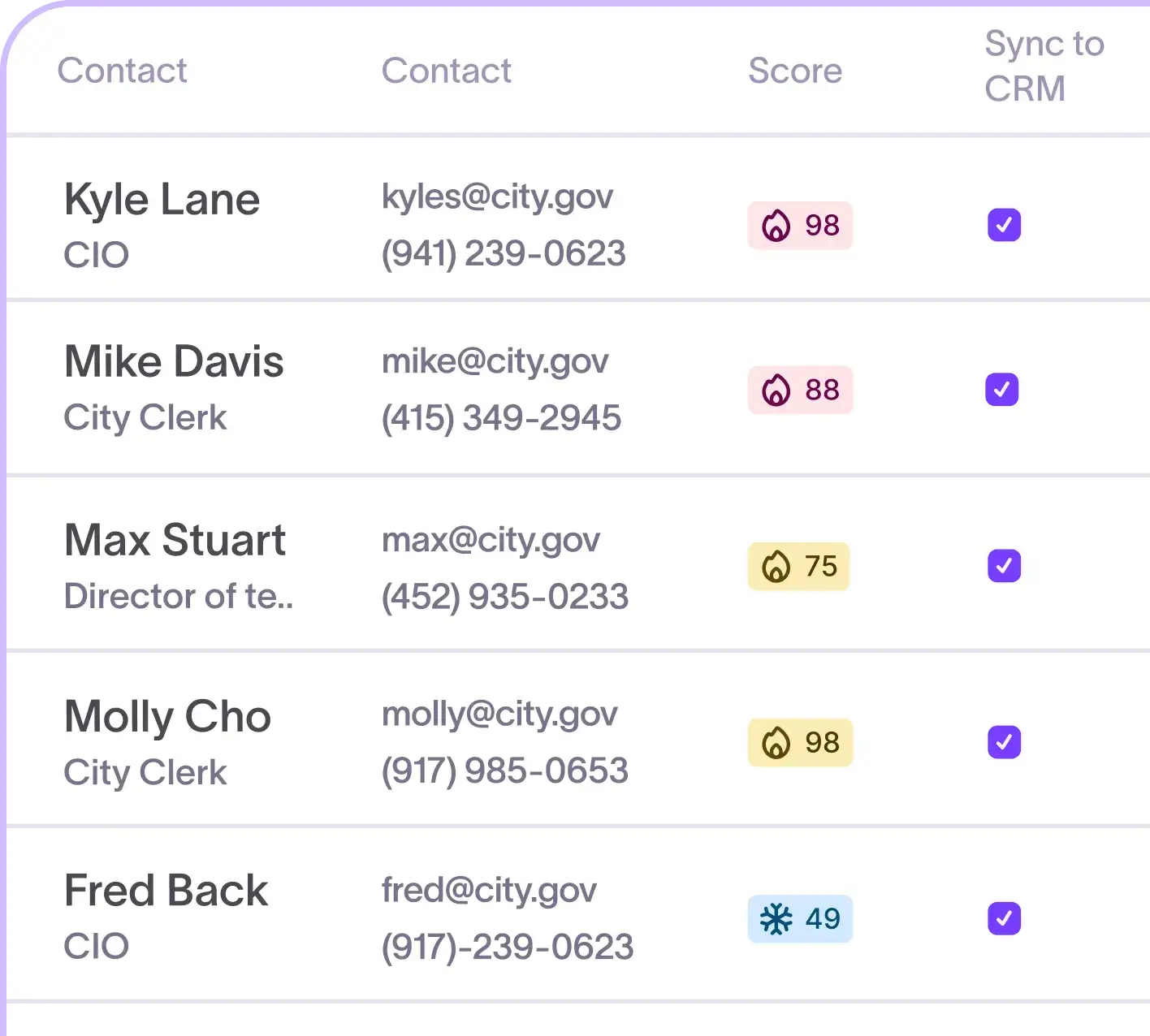
Mantra Health 3x'd their data enrichment coverage with Starbridge, enriching more than 3,000 accounts through a bidirectional Salesforce sync without a technical Salesforce admin. Their reps replaced manual research across university websites and ChatGPT with shared campus records the whole team can see.
What Determines Whether or Not You Face an RFP (and How Can You Bypass It)?
Three separate rulebooks govern campus purchases, and which one applies changes the entire sales motion. More than one can apply to the same purchase.
The federal rulebook is the one most vendors never read, and it carries the most useful pair of numbers in campus selling. An institution may self-certify a micro-purchase threshold up to $50,000 a year, and informal methods remain available up to the $350,000 simplified acquisition threshold under FAR 2.101.
The rules stack rather than replace each other, and the stricter one wins.
Working out which rulebook applies, what the current threshold is, and whether the money is grant-funded takes real research per account, and it has to be redone whenever a state adjusts its figures.
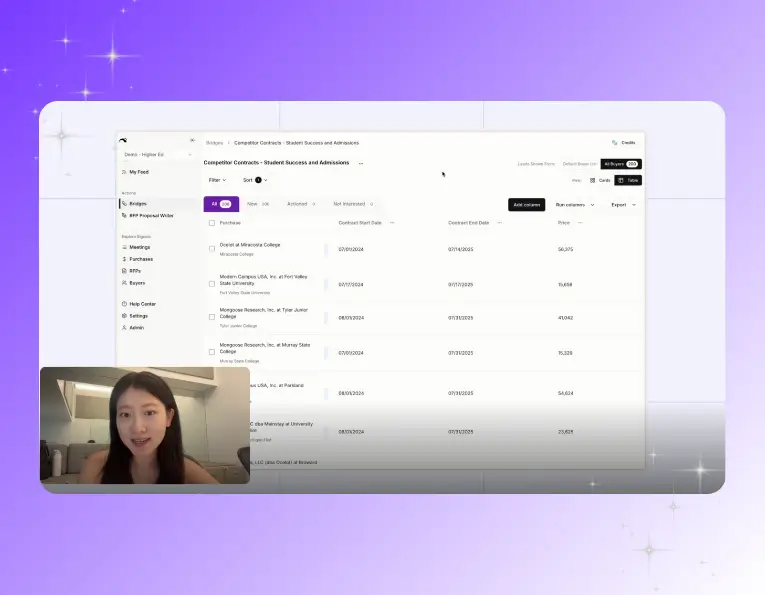
Ask Starbridge answers procurement questions in plain language against public spend and contract records, returning purchase orders, awarded contracts, and pricing history for a specific institution instead of a list of documents to read.
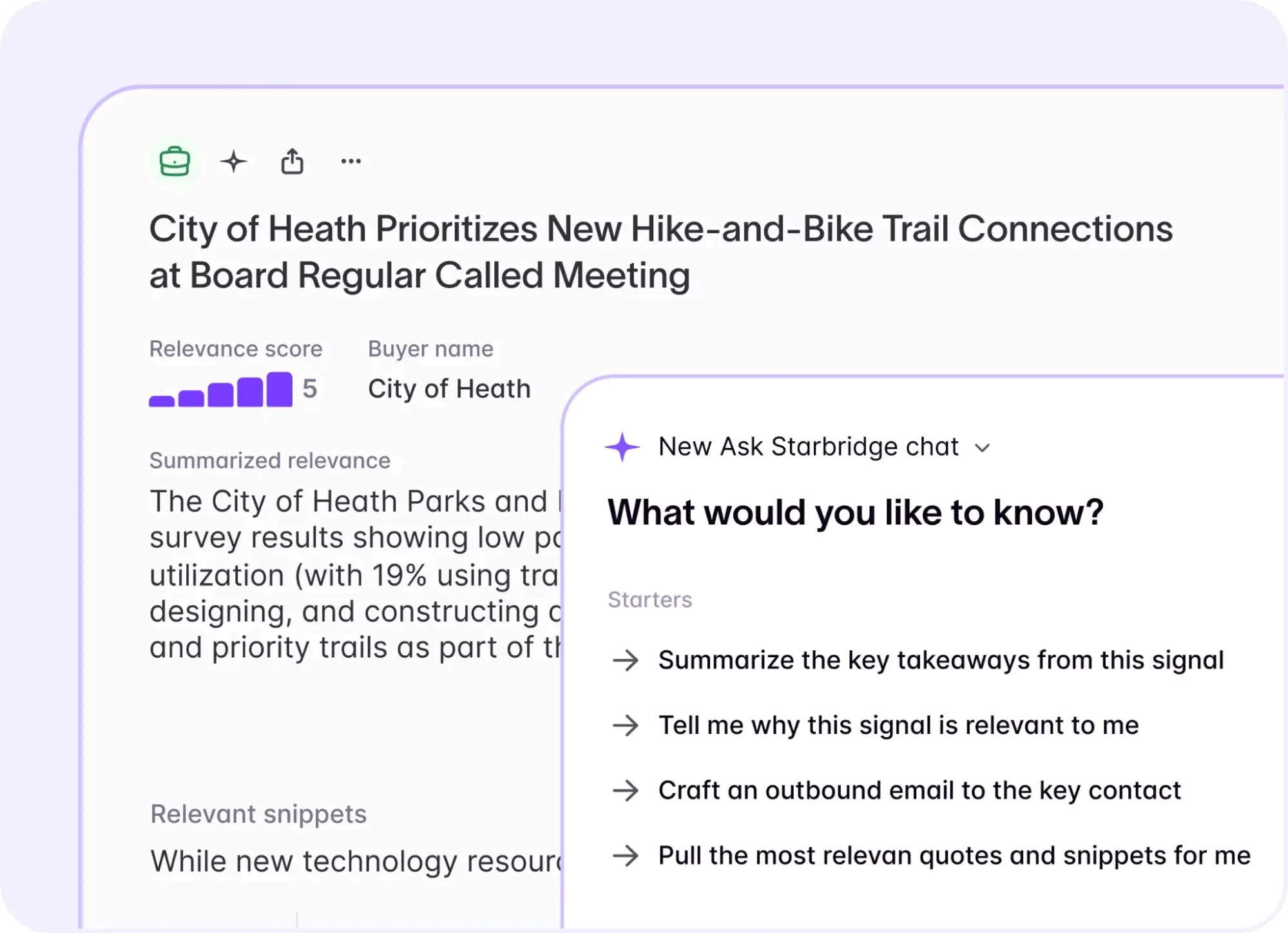
MGT, which helps higher ed institutions navigate complex technology decisions, cut procurement research from 20 to 30 minutes down to 5 to 10 minutes per query. Their senior data analyst stopped double-checking results because the accuracy no longer required it.
Staying under the threshold is one of three legitimate routes past a formal solicitation.
What Are the 3 Ways to Bypass a Formal RFP?
None of these is a loophole. All three are routes procurement codes deliberately provide, because a competitive process that has already happened does not need to happen again. They ladder by how much work they take on your side.
The cooperative contracts that matter in higher ed
Getting onto one is a competitive solicitation like any other. It just happens once.
At NASPO ValuePoint, a lead state works with a Multistate Sourcing Team to issue an RFP designed for multi-state use, and the winners receive master agreements that other states and eligible entities can buy from without running procurements of their own.
Starbridge offers contract vehicle access to vehicles such NASPO ValuePoint, Sourcewell and OMNIA Partners as part of the platform, which can significantly shorten the procurement process in higher education.
How Do You Sell to Colleges and Universities?
The procurement office is a gatekeeper, not a buyer. Selling into a campus means finding the unit that owns the problem your product solves, then reaching whoever leads it. For an enterprise system that is the CIO. For a discipline-specific tool it is the department chair or program director. For research infrastructure it is the principal investigator with an active award.
Campus requirements form long before a solicitation exists, and the engagement window has three phases.
Most institutions run a fiscal year from July 1 to June 30, which concentrates encumbrance activity in April through June as departments commit unspent allocations before they lapse. Grant-funded purchasing runs on a second clock the institution does not control, because award periods follow the funding agency's schedule. The two rarely align, so a campus that looks quiet on the institutional cycle can be actively buying on the research one.
Monitoring both clocks across a few thousand institutions is not something a team does by hand. Campus buying activity sits in board of trustees materials, capital plans, grant award announcements, budget documents, and contract expirations, spread across thousands of sites that publish on no common schedule.
Starbridge's Buying Signals Monitor tracks more than 320,000 government and education entities continuously and surfaces the early demand indicators that mark a forming requirement, including board and trustee meeting discussions, new budget lines, grant awards, leadership changes, and contract expirations. Each one arrives with the source document, the contact to reach, and the reason the timing is right.
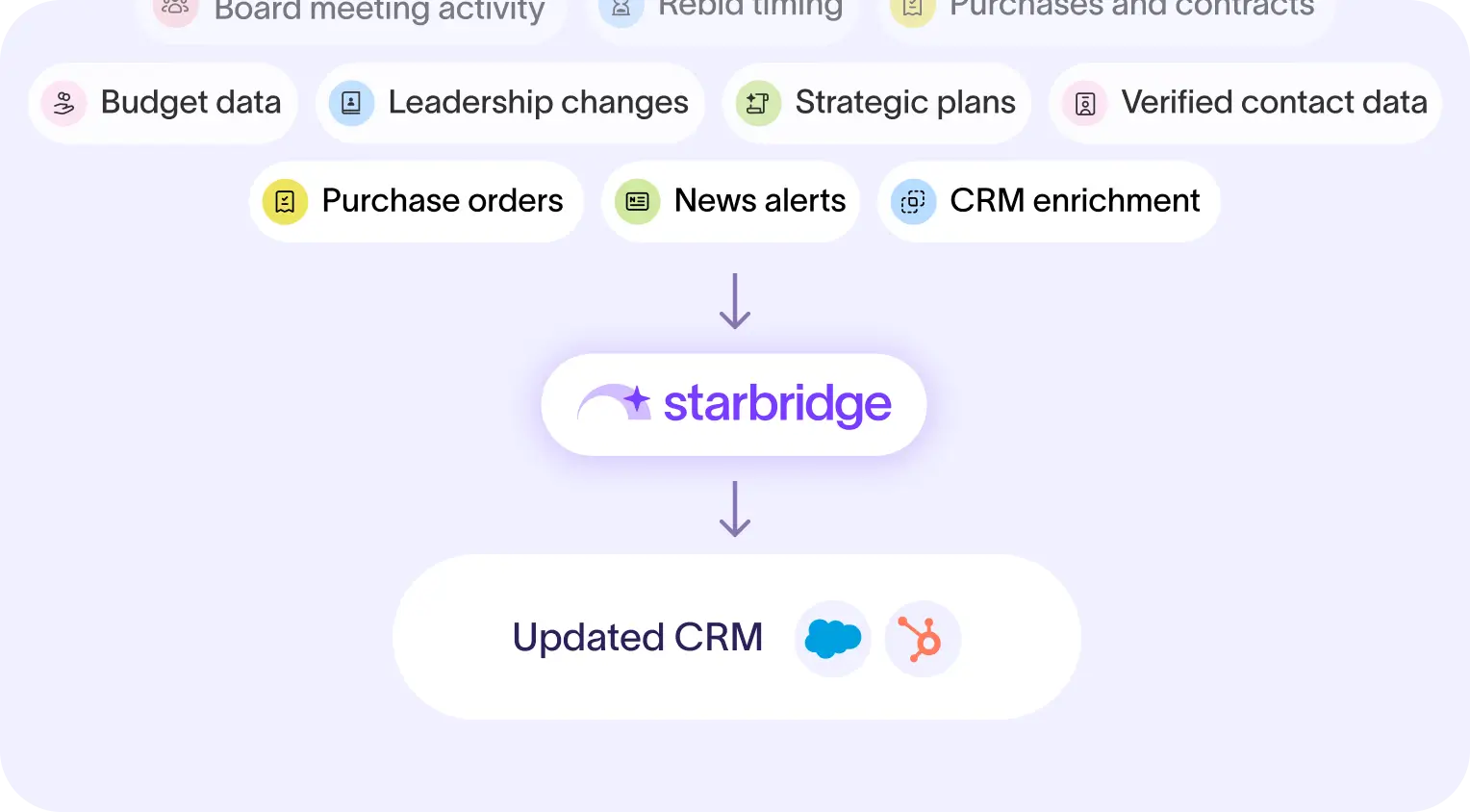
Zencity sources 50% of its cold meetings from Starbridge. Their enterprise reps pull an account's current priorities from recent public meetings in seconds, then walk into first calls already knowing the procurement pathway and the right talk track.
Reps working from that kind of intelligence reach a department while the requirement is still being written, which is what it takes to be the vendor crafting the RFP.
Conclusion
Higher education procurement rewards vendors who understand how to navigate procurement and who influence deals early while demand is still forming. Decisions start in a department, a lab, or a dean's office, and by the time they reach a solicitation the specification usually reflects whoever was in the room during discovery.
Three things carry most of the weight. Learn which of the three rulebooks governs the campus, because state code, board policy, and federal grant terms produce three different sales motions. Know the threshold before you price, since it decides whether you face an RFP at all. And engage while the requirement is still forming, which on a campus means talking to the department rather than the procurement inbox.
See how Starbridge surfaces campus buying activity so your reps reach the right department before the solicitation and win more deals.
Frequently asked questions
Explore our use case library
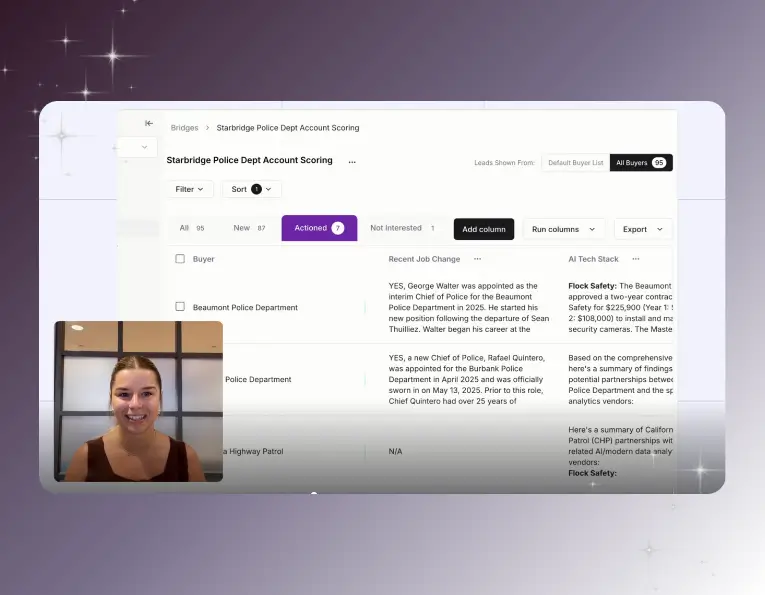
Ready to give your SLED team real leverage?
Let’s talk about how Starbridge can build a qualified pipeline for your current team — without adding headcount.