.svg)

A Guide to Public Sector GTM Intelligence

In public sector sales, the strongest buying signals often appear months before an RFP is published. The vendor who shaped the requirements may have started building the relationship much earlier, while the need was still surfacing in board meetings, budgets, and other public records.
This guide explains what public sector GTM intelligence is, how federal and state purchasing records differ, which government buying activities predict a purchase, and how to run the practice as a repeatable operating model.
The approach applies to federal agencies and to state and local governments, K-12 school districts, and higher ed institutions, because every level of government creates a public record before it spends money.
What Is Public Sector GTM Intelligence?
Public sector GTM intelligence is the practice of tracking published government records, such as adopted budgets, board meeting minutes, and contract data, to identify which agencies are moving toward a purchase and when. Unlike commercial intent data, it is based on observable steps agencies have taken toward a purchase.
Why Commercial Sales Intelligence Misses Government Buying Activity
Commercial sales intelligence is built on a data universe that government and education buyers barely touch. Intent products track website visits, ad clicks, and content downloads. Contact databases draw heavily from professional networking profiles and corporate web data.
A county budget officer or district technology director may have none of that footprint, and the buying decision they make may never pass through a marketing funnel.
Government and education demand lives somewhere else entirely.
Every state and the District of Columbia has an open meetings law, and those laws generally require public bodies to give advance notice of a meeting, publish an agenda, and produce minutes afterward. A district that wants new assessment software has to say so on the record before it can buy. Every purchase a public sector entity makes leaves behind a well-documented paper trail.
The cost of ignoring the paper trail shows up in rep behavior. Without a way to rank accounts by what the buyer has actually said in public documents, reps default to enrollment size, geography, or alphabetical order. This leads to marketing messages or sales conversations that don’t convert.
On the contrary teams that focus on the paper trail to optimize their marketing or sales conversations, often spend a lot of time manually searching agency sites one at a time, and building lists in spreadsheets.
Federal Versus State, Local, and Education Intelligence Models
Federal buying converges on a single channel by regulation.
State, local, and education (also called ‘SLED’) buying has no equivalent.
There is no single point of entry, no single threshold, and no single rulebook. Procurement authority sits with 50 state codes and thousands of local charters, and buying itself is spread across the 91,438 local governments the Census Bureau counted as of 2025. A vendor cannot subscribe to one feed and consider the market covered.
The two models also differ in where the earliest evidence appears:
- Federal requirements tend to surface through published planning documents and formal industry engagement.
- State and local requirements surface in the room, in board and council meetings held under state open meetings statutes, often a year or more before a solicitation exists.
A federal team can watch a portal. A state and local team has to watch meetings.
The rest of this guide covers state and local purchasing. Everything that follows applies to state and local governments, K-12 school districts, and higher ed institutions, where the record is richer, the entity count is higher, and the timing advantage is greatest.
Which Government Buying Signals Predict a Purchase?
Buying indicators that predict a purchase share one property. Each one reflects a decision the buyer has already made, recorded by someone with authority to make it. When more than one indicator appears on the same account, the case becomes stronger, this is a pattern covered in the guide to government buying signals.
Some published activity can look like a buying indicator but usually is not. For example, job postings show that an initiative may be staffing up, but a posting alone does not confirm budget or timing..
A published RFP is the weakest indicator of all. By the time the RFP drops, the deal is often already decided, and the relationship's already set with whoever helped shape the requirements.
The predictive indicators also include dates, which is what distinguishes this evidence from commercial intent. A grant has a spend-by deadline. A contract has an expiration date. A budget line belongs to a fiscal year, and most state and local governments and school districts run from July through June. Reading the date on the record is what makes the buying window knowable in advance.
Turning Public Sector Buying Signals Into Scored Accounts and Outreach
A scoring model for government and education accounts commonly uses three inputs that a commercial model does not.
These inputs are recent buying activity in the record, allocated budget for the category, and the incumbent contract's position in its term.
For example, an account with a board discussion, a funded line item, and a contract expiring in nine months is a different opportunity from an account with a board discussion alone. The score should reflect that.
Instead of enrollment size or alphabetical order, a rep opens a ranked list in which the top accounts include a stated reason and date.
Monitoring that record manually does not scale beyond a handful of accounts. A single board packet takes 20 to 30 minutes to read properly, and a national territory includes thousands of districts, cities, and counties.
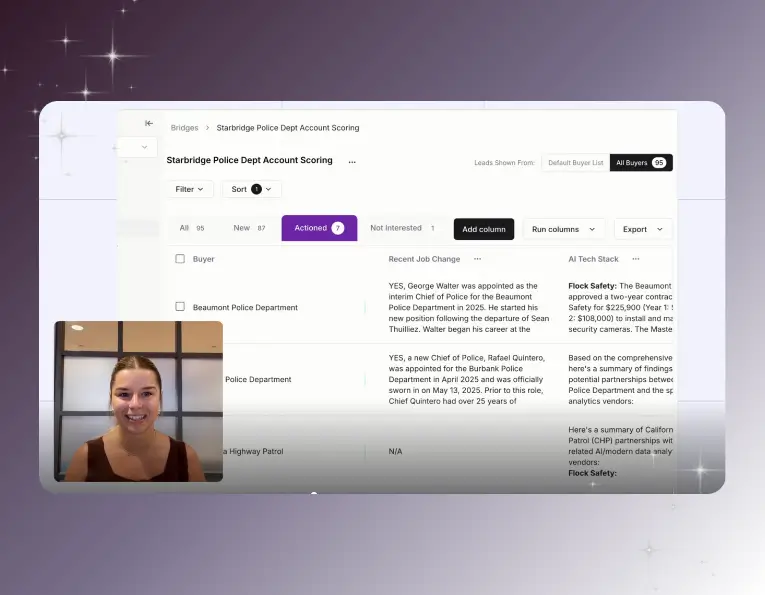
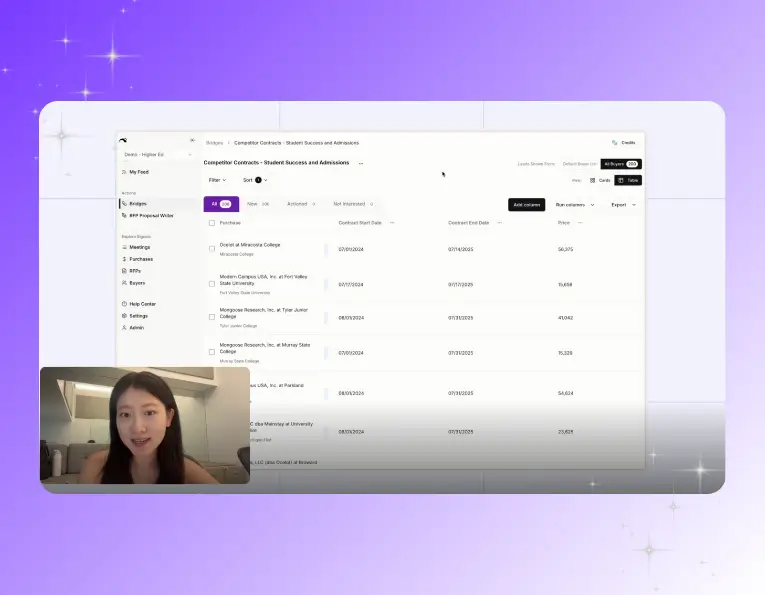
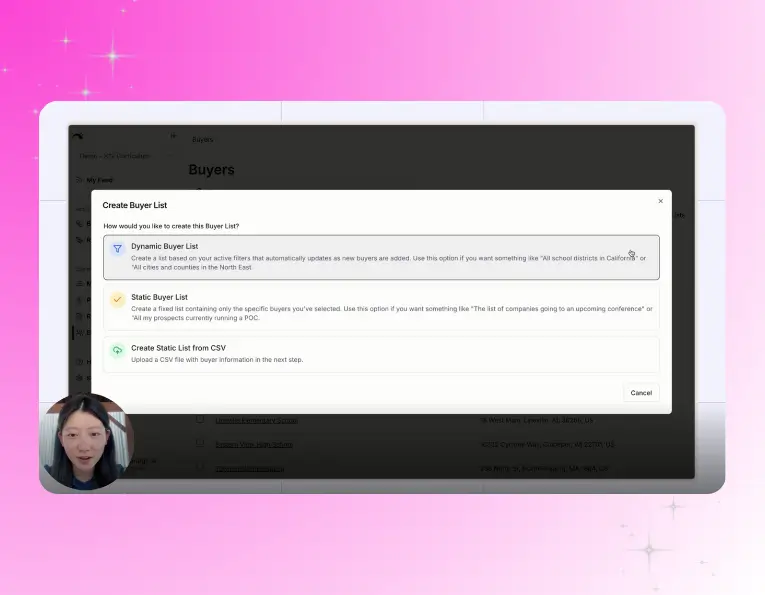
Starbridge is the AI GTM platform for companies selling to the government, K-12, and higher education, helping teams prioritize the right accounts, engage the right people earlier, and identify high-intent opportunities before the competition.
Every warm lead arrives with the buying indicator that triggered it, who to contact, and what to say, generated by the Buying Signal Monitor across more than 320,000 government and education entities tracked around the clock.
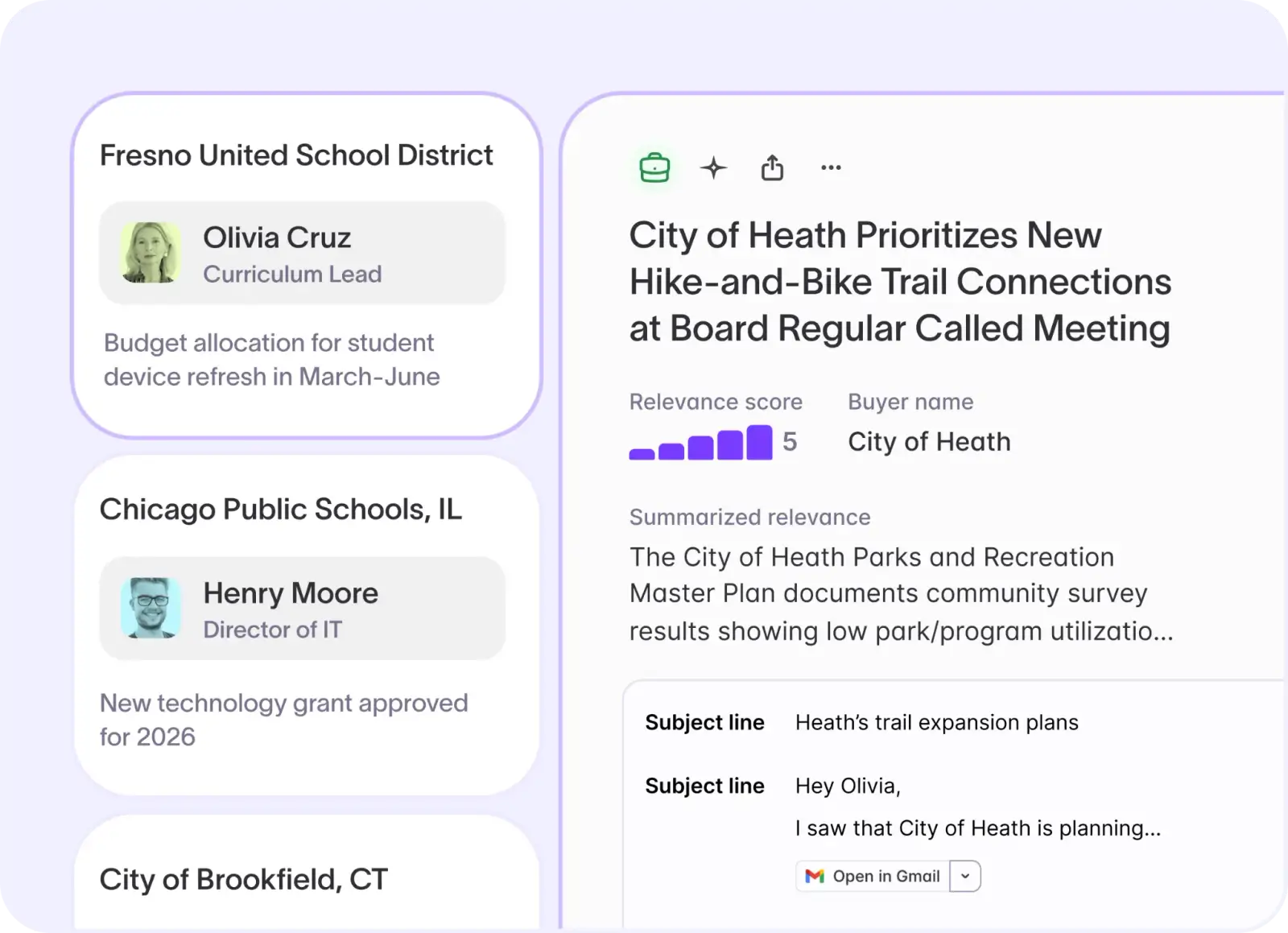
InquirED drove $200K in new pipeline in their first quarter with Starbridge, replacing manual board-document research with signal-driven account scoring that revealed which districts were actually ready to buy.
Start Reading the Record Before the Solicitation
Government and education buyers put their intentions on the record before they spend money. The record is public, dated, and scattered across 91,438 separately governed local bodies.
A sales team that reviews the record early can shape the requirements instead of just responding to them. A team that waits for the solicitation ends up competing on price against a vendor who has been in the room since the problem was first raised.
Public sector GTM intelligence turns published buying activity into a scored territory, a dated outreach calendar, and contracts your team actually wins.
Book a demo to see which accounts in your territory already show budget, buying activity, and an upcoming contract renewal.
Frequently asked questions
Yes, but the signals are different. Federal sales intelligence focuses more on federal procurement notices and agency planning documents. State, local, and education intelligence relies more heavily on public meeting records, budgets, and other documents published under state transparency laws.gf
An alert service tells you a solicitation exists. Public sector GTM intelligence reviews the meeting minutes, budget documents, and contract records that precede the solicitation, often by a year or more. By the time the RFP drops, the deal is often already decided, and an alert arrives after that point.
Board and council meeting agendas and minutes, adopted budgets and capital plans, strategic plans, grant awards, contract and purchase order records, and agency staff directories. Every state and the District of Columbia requires public bodies to notice meetings and produce minutes, which is what makes the first category available at all.
Explore our use case library
Ready to give your SLED team real leverage?
Let’s talk about how Starbridge can build a qualified pipeline for your current team — without adding headcount.