.svg)

Public Sector Marketing: A Practical Guide for Teams Selling to Government and Education

Marketing to the public sector is very different than marketing to companies.
Government agencies, school districts, and universities have different buyers, budget cycles, procurement requirements, and timelines than commercial organizations.
That changes not just who you market to, but when and how you reach them.
This guide explains what public sector marketing is, who the buyers are, and how to build campaigns around the way government and education organizations actually buy.
What Is Public Sector Marketing?
Public sector marketing is how a company generates demand from government and education buyers, including states, counties, cities, school districts, and universities. That work differs from marketing done by a government agency to its own residents.
Who Public Sector Customers Are, From State Agencies to School Districts
The public sector includes both the federal government and the state, local, and education (SLED) market. Federal agencies are major buyers in their own right, but they operate through a different procurement ecosystem. This guide focuses on SLED, where buying is spread across tens of thousands of independent governments, school districts, and public institutions.
Public sector customers in the SLED market are governments and public institutions that purchase goods and services with taxpayer money. In 2025, the United States had 91,438 local government units, according to the Census Bureau's Government Organization Summary Report.
That total includes 3,031 counties, 19,489 municipalities, and 16,184 townships. The same count also includes 40,199 special districts and 12,535 independent school districts. Add the 50 state governments, their agencies, and public colleges and universities, and the state, local, and education market runs to tens of thousands of separate buyers.
Each unit governs its own purchases. A county commission approves county contracts, a school board approves district contracts, and a utility district approves its own. No central buyer exists to sell once and win everywhere.
The market is also growing. The number of special district governments rose from 38,542 in 2017 to 39,555 in 2022 and to 40,199 in 2025.
For a marketer, that structure determines how a target list is built:Segment by entity type and size before segmenting by persona, because the largest districts and the smallest ones share job titles and almost nothing else.
How Is Public Sector Marketing Different From B2B Marketing?
The channels look familiar. Email, events, and account-based programs all work here.
What changes is the buyer, the evidence they need, and how much of their decision happens in public.
A commercial buyer spends the company's money to grow the business. A government or education buyer spends public money against a mandate, and every dollar competes with a road, a classroom, or a payroll line.
Messages built on competitive advantage land softly. Messages built on service delivery, compliance, and cost per resident land much harder.
Proof works differently too. A logo wall from private industry carries less weight than a single reference from a comparable agency of similar size in the same state.
Reference calls, cooperative contract availability, and security documentation are requested early, often by people who will never take a sales call.
The largest structural difference is that the evaluation happens in public. Every state has open records and open meetings laws, and the Reporters Committee for Freedom of the Press maintains a state-by-state guide for all of them.
Board agendas, meeting minutes, and awarded contracts are published or obtainable on request.
A commercial competitor's contract terms are confidential. A public agency's contract terms are a matter of public record.
That access is the advantage marketers coming from B2B underuse most.
Sales cycles also run longer, and they end on a date the buyer controls rather than on the date your quarter dictates. Planning a campaign around your own pipeline targets instead of the buyer's calendar is usually where a first-year program in this market goes wrong.
Public Sector Budget Cycles and What They Mean for Campaign Timing
Public money has to be appropriated before it can be spent:
- A need becomes a budget request
- The budget request becomes an approved line item
- And only then does purchasing move.
For most of the market, that calendar is shared. Forty-six states begin their fiscal year on July 1, according to the National Association of State Budget Officers. New York starts April 1, Texas starts September 1, and Alabama and Michigan start October 1.
Work backward from those dates.
- A budget for a fiscal year starting July 1 is written and approved before that date, so a campaign landing in late winter reaches a buyer while next year's request is still being shaped.
- The same campaign landing in August reaches a buyer whose funds are already committed.
Don’t wait for the RFP (Request for Proposal). Waiting for the RFP means arriving only after the requirements are written. Evidence that a purchase is taking shape appears earlier and in public. A strategic plan names a priority, a board agenda schedules the discussion, and an expiring contract sets a replacement date.
One rep can read one district's board packet before a call. No marketing team can read tens of thousands of board packets every week.
That’s one of the reasons we created Starbridge.
Starbridge is the AI GTM platform for companies selling to the government, K-12, and higher education, helping teams prioritize the right accounts, engage the right people earlier, and identify high-intent opportunities before the competition. The Buying Signals Monitor watches board meetings, budget documents, and contract expirations across 320,000+ government and education entities, then routes each account to your team with the buying indicator behind it.
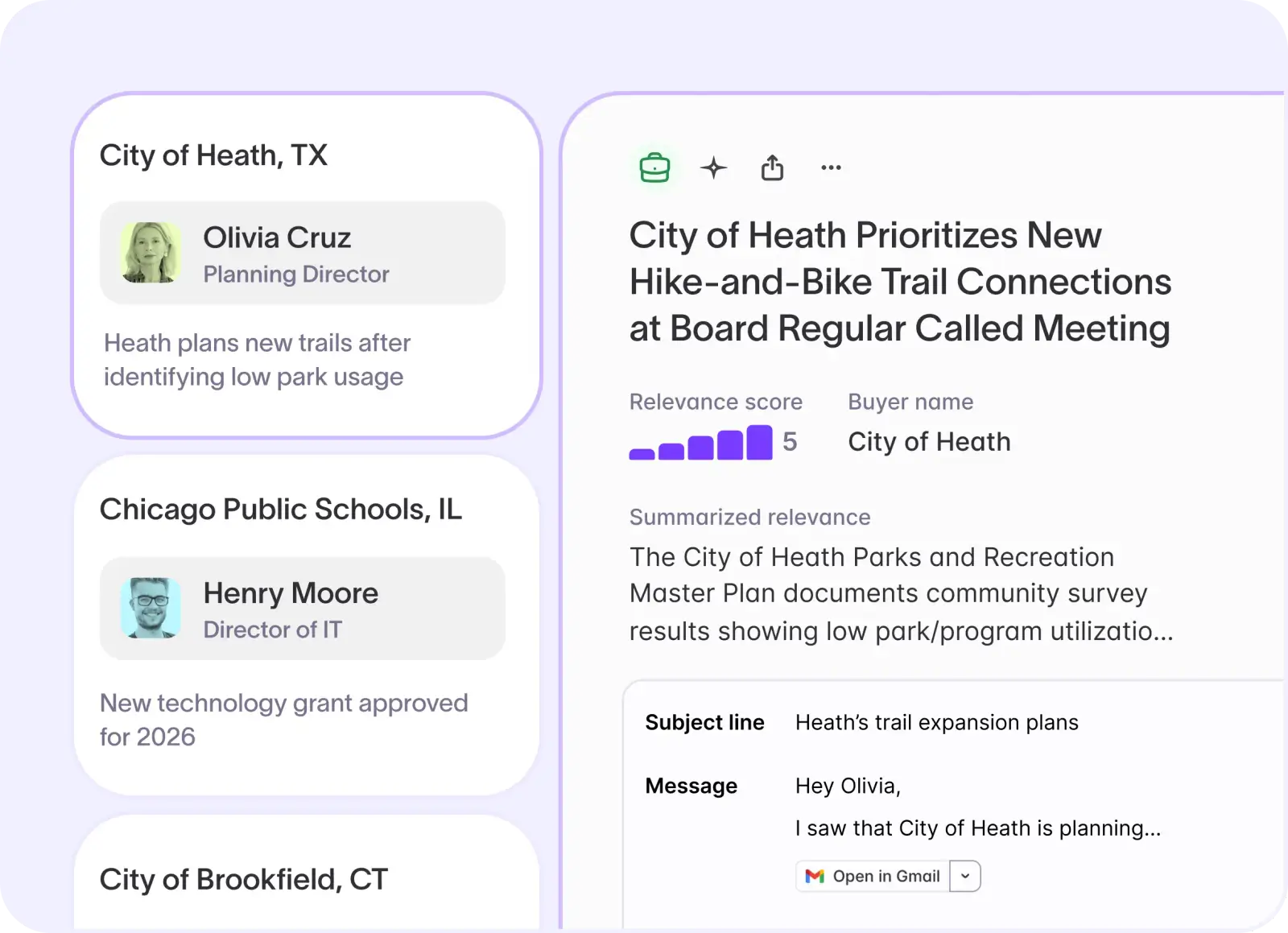
GovWell sources 15% of its total qualified pipeline from Starbridge. In its first week, the team booked 5 meetings.
Reaching buyers while the budget is still being decided is how an early conversation becomes a closed deal.
Reaching Government and Education Decision-Makers
Government and education buyers are reachable, but not through the channels a standard B2B list assumes.
Many hold titles that never appear in commercial contact databases. Their contact details usually appear in a public staff directory, a board roster, or a meeting agenda.
Those records go stale quickly. The ILO Group's Superintendent Research Project found that 114 of the 500 largest school districts, or 23%, replaced their superintendent in a single year. Most of the replacements, 58%, were internal hires. That study covers only the largest districts, and similar churn runs through business officials, technology directors, and city managers.
A list built once decays into bounces and wrong-title outreach within a year. Reps then rebuild it by hand, doing the same manual research the campaign was supposed to replace.
Accurate contact and account data keeps a campaign reaching the person who holds the budget. Starbridge contact data tested at 98% email accuracy across 14,000 emails, against the 60 to 70% typical of generic databases. We’ve achieved that accuracy by continuously scraping official .gov and .edu sources.
Starbridge also allows you to seamlessly sync contact data into Salesforce or HubSpot so records stay current without manual cleanup.
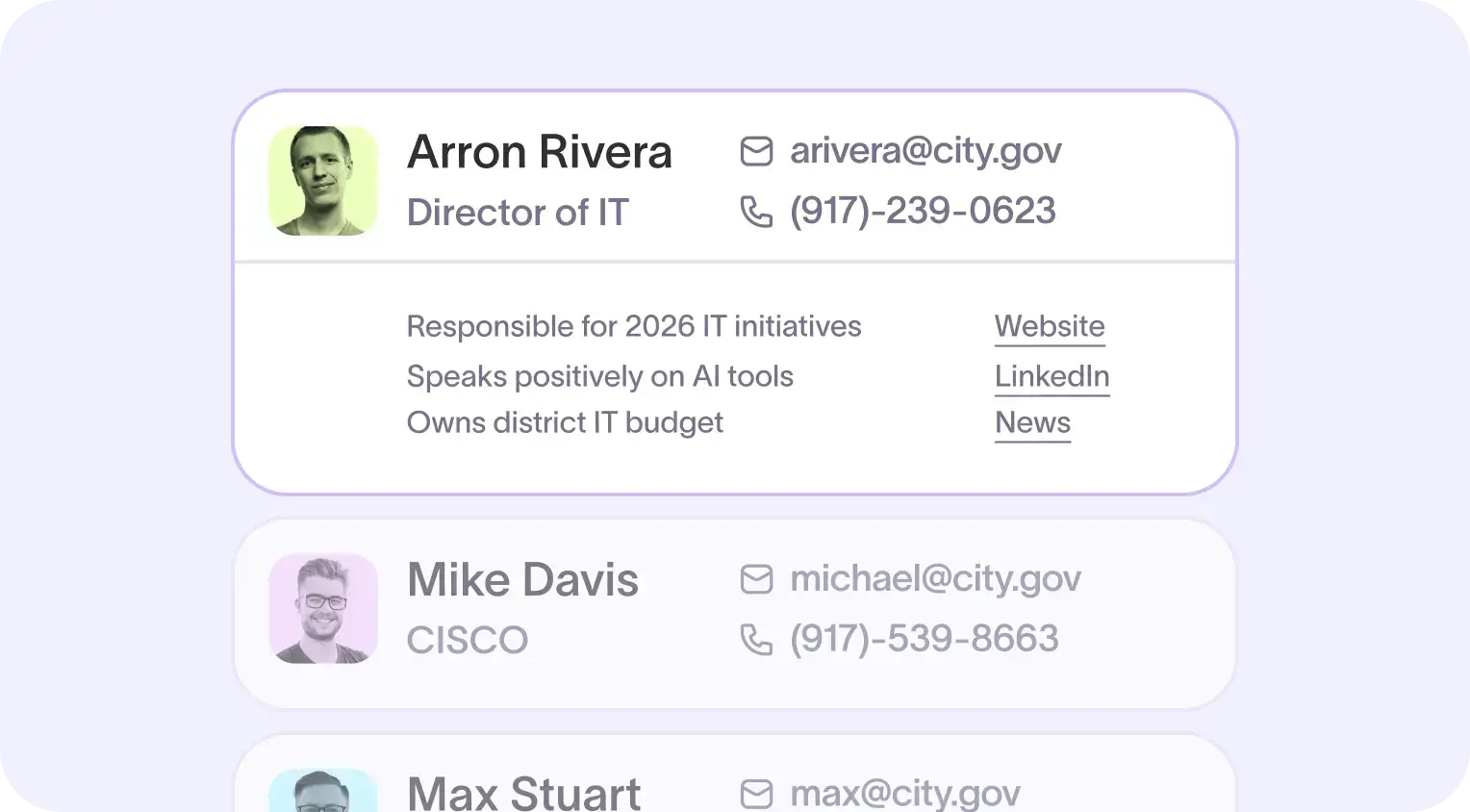
TAM to Target reports Starbridge contact data is 3 to 4 times more valid than other vendors, which removed the manual verification step before each campaign.
Whatever tooling you use, treat the contact list as a living asset. Re-verify it before every major send, and treat title changes as an opportunity to reach out rather than as a data-cleanup chore.
Conclusion
Public sector marketing rewards teams that plan around the buyer's calendar and the buyer's evidence. The market consists of tens of thousands of separately governed entities, the money moves through an appropriation process before purchasing begins, and the decision leaves a public trail long before an RFP appears.
A marketer new to the public sector gets the most from a focused account list with verified contacts, a campaign calendar aligned with government budget cycles, and a measurement plan built around leading indicators. The tactical plays build on those fundamentals.
See how Starbridge turns board meetings, budget documents, and contract expirations into a ranked account list your team can work this quarter. Book a demo to see it applied to your own territory and win more deals.
Frequently asked questions
The public sector includes the federal government and its agencies as well as state, local, and education (also called ‘SLED’) organizations. This includes state agencies, counties, cities and towns, school districts, public colleges and universities, and special districts such as water, transit, fire, and library districts.
This guide focuses primarily on the SLED portion of the public sector.
A public sector institution is owned or controlled by a government, such as a state university system, a municipal utility, or a public transit authority. A publicly traded company is a different thing, a private business whose shares are sold on a stock exchange.
Explore our use case library
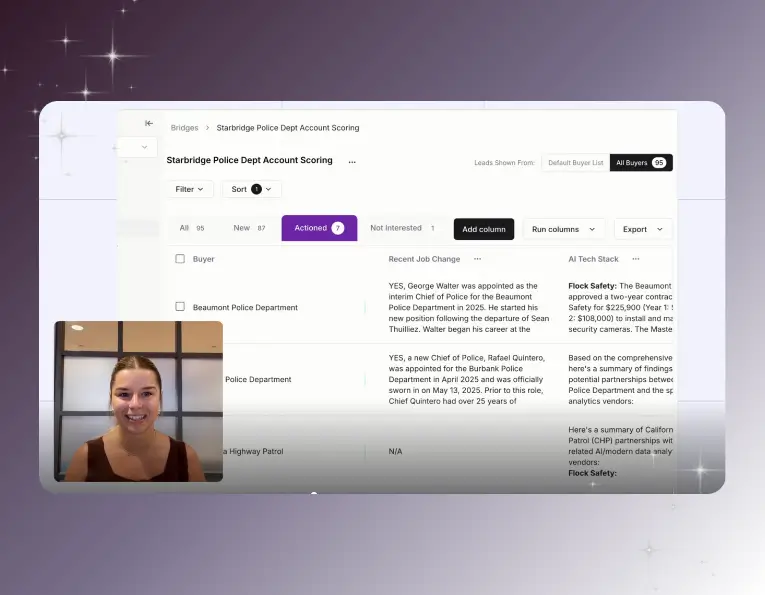
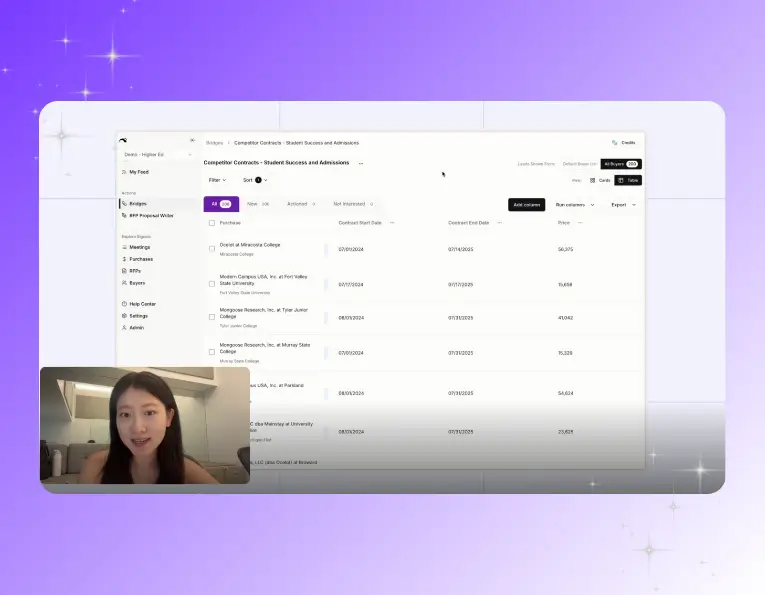
Ready to give your SLED team real leverage?
Let’s talk about how Starbridge can build a qualified pipeline for your current team — without adding headcount.