.svg)

Starbridge vs DistrictIQ: Which platform helps you close more K-12 deals?

Starbridge vs DistrictIQ both surface early opportunities in a market where buying cycles are long, and procurement is opaque.
- Starbridge is the AI GTM platform built for the whole government and education motion, from the first buying indicator to a signed contract.
- DistrictIQ is an early K-12 facilities and capital-project intelligence tool for construction and facilities vendors.
This comparison covers all five solution areas GTM teams selling into K-12 should evaluate.
Spotting early buying opportunities from data sources
A buying signal is an early sign that an account is planning to spend, such as a new grant or a contract about to expire. The data sources a platform reads decide whether your team engages early or arrives after a competitor has shaped the requirements.
Starbridge surfaces buying indicators across board minutes, budgets, grants, leadership changes, and more
Engaging early instead of late comes down to how many data sources a platform reads and what it does with them.
Starbridge's Buying Signal Monitor watches 320K+ entities around the clock across state and local government, K-12, and higher education, reading the places where buyers reveal intent first. It pulls from board minutes, strategic plans, budgets, grants, job postings, contract expirations, and news, and it treats bids and RFPs as the last buying indicator rather than the first, since a posted RFP usually means a competitor has already shaped the requirements.
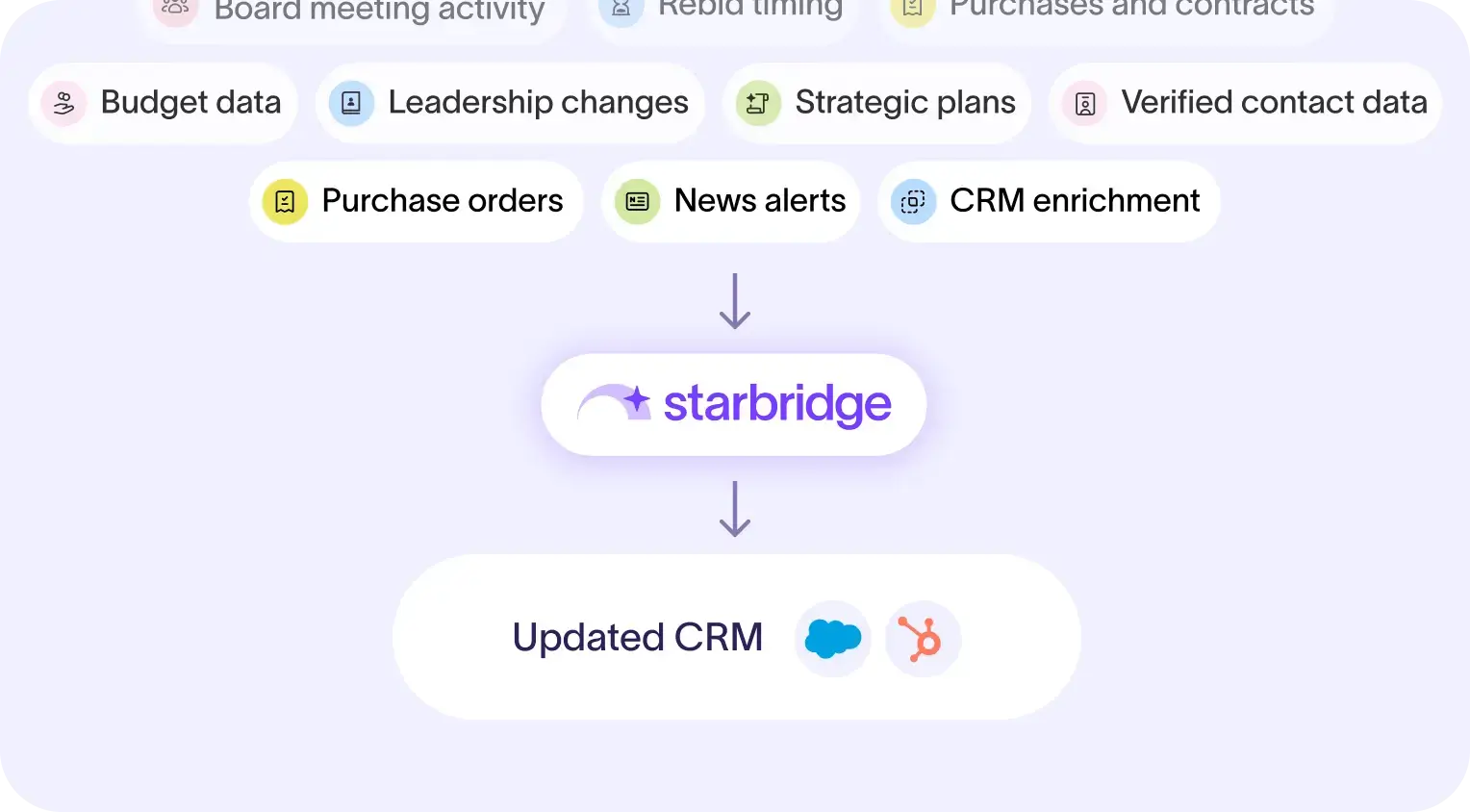
A buying indicator is only as valuable as what a rep can do with it. Starbridge attaches a verified contact, a reason to reach out, and AI-generated outreach copy to each one, then pushes it into Apollo, Outreach, Salesforce, and HubSpot so the rep can act without leaving the tools they already use.
That turns early intent into a booked conversation rather than another line in a report, which is how Zencity sources 50% of its cold meetings from Starbridge buying signals.
DistrictIQ reads K-12 board packets to flag facilities and capital-project signals
DistrictIQ reads full board agenda packets, minutes, and financial records across thousands of K-12 districts, monitored daily. From those records, it structures facilities-specific signals such as feasibility studies, long-range facility plans, referendum planning, debt rolloff, and architect and construction-manager selection.
The product is focused on facilities buyers. It offers weekly territory alerts and CSV or Power Query exports that drop capital-project activity into a vendor's own tools.
The bottom line
Both platforms surface early intent. DistrictIQ concentrates on the K-12 facilities and capital-project lane. Starbridge spans every government and education vertical and every signal type, then hands the rep a verified contact and outreach copy ready to send, which is what turns an early signal into a booked conversation.
Another core differentiator between these platforms is proven scale and results. Starbridge serves 450+ customers, including enterprise organizations, whereas DistrictIQ doesn’t, as of August 2026, advertise any customer logos or stories.
Contact and account enrichment that stays current
Contact and account enrichment is how a rep gets from a signal to the right human, with enough context to open a relevant conversation. In government and education, freshness and verified accuracy are the whole game. A record that was correct last year routinely points to someone who has since changed roles.
Starbridge delivers 98% email accuracy through continuous .gov and .edu crawls
Contacts & Company Data is built for this market rather than borrowed from it. Instead of drawing heavily from LinkedIn and commercial sources, it runs continuous crawls across government sites, school district portals, university websites, and board minutes, then waterfall enriches the results and bounce-checks them on an ongoing basis.
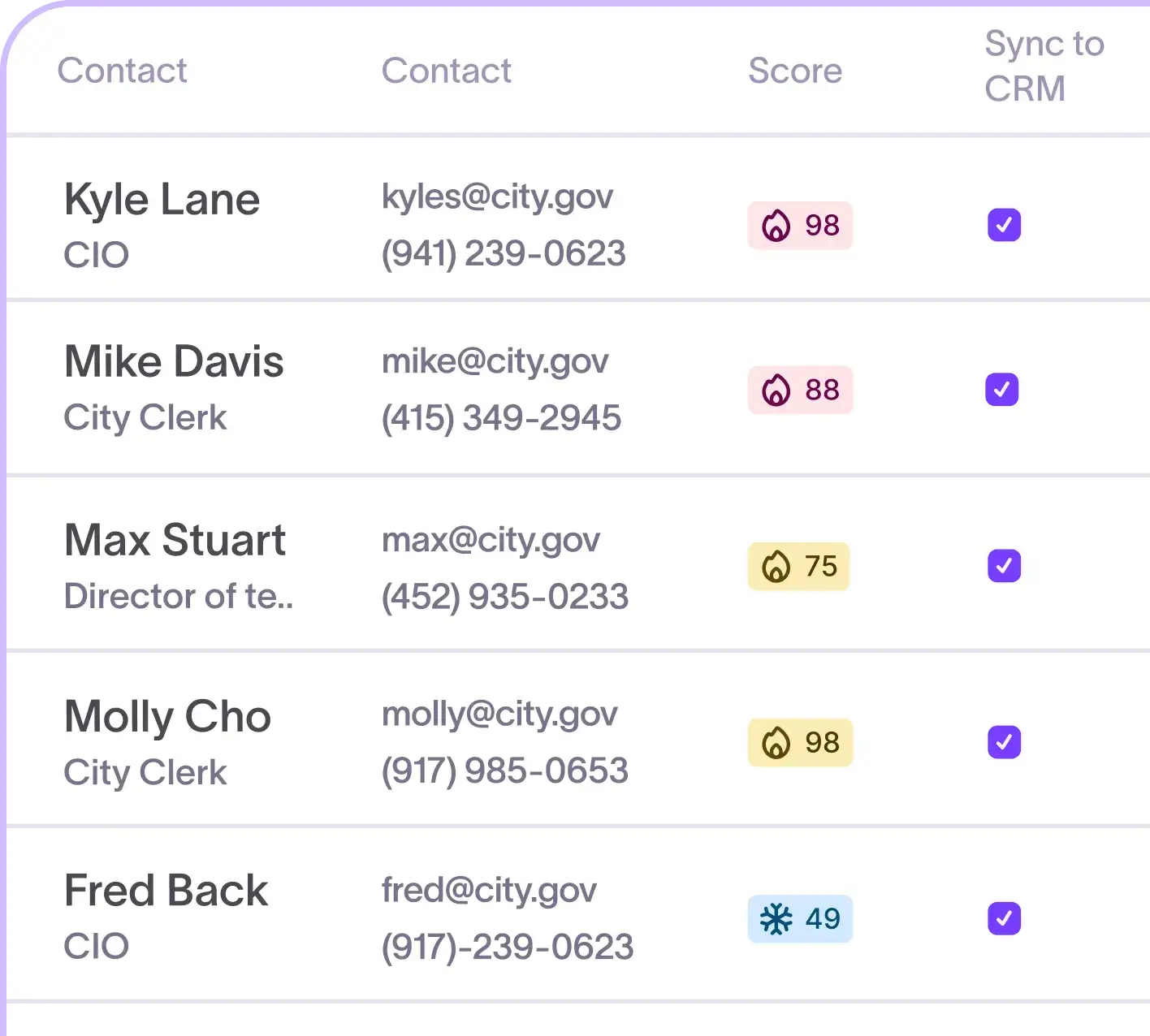
The accuracy shows up in the numbers. A test of 14,000 emails returned 98% accuracy, with a 2% bounce rate and 3 to 4x the enrichment coverage of generic databases. A rep can send outreach into a finite market without the fear that one bad address burns a relationship.
Verified contacts are the starting point, not the finish. Dynamic account scoring surfaces the warmest accounts first, and AI-generated positioning briefs connect each account to the specific buyer pain a rep can speak to on the first call.
All of that data flows into the CRM automatically. Native bidirectional Salesforce and HubSpot sync cleans and enriches records in place, so the system of record reflects reality without a rep touching a field.
DistrictIQ maps which vendor firms are engaged at each district
As of August 2026, DistrictIQ approaches accounts through a vendor registry. A user can look up a firm and see which districts it is engaged in, each entry linked back to the board record that documents it.
Open a district instead, and the view shows which planning seats are filled and which are open across the owner's representative, architect, construction manager, and financial advisor. For a facilities vendor deciding where a relationship is still winnable, that engagement map is useful context.
The bottom line
DistrictIQ shows which firms already sit at a district's table. Starbridge delivers the verified decision-makers’ contacts, scored and enriched, pushed straight into Salesforce and HubSpot so every rep can act on them the same day.
Understanding vendor spend across government and education
Vendor spend intelligence tells you what an account already pays, and to whom. That visibility drives account prioritization, competitor displacement, and sharper discovery calls.
Starbridge runs FOIA automation to surface full competitor contracts, not just line items
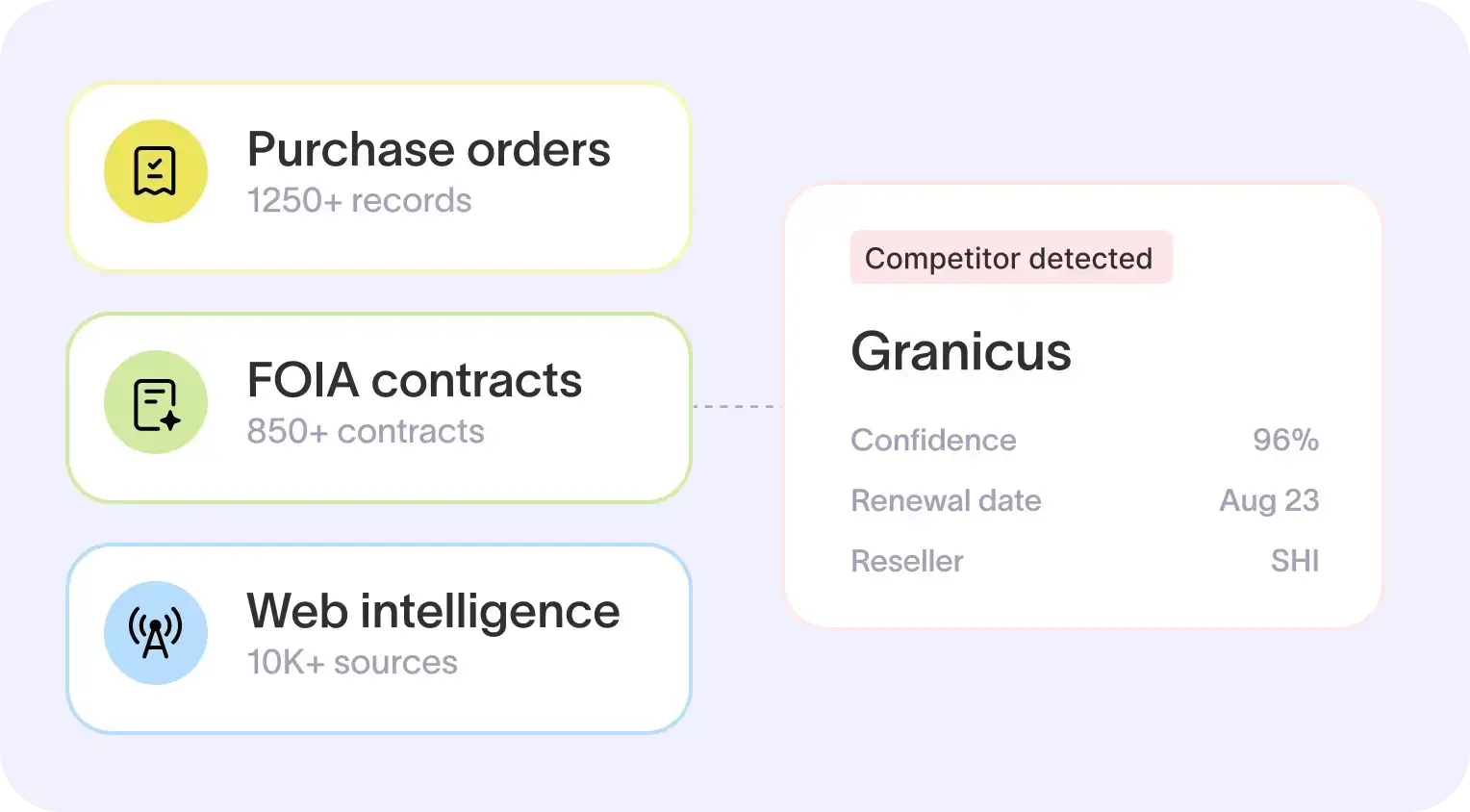
Line-item purchase data tells you that an account bought something. It rarely tells you what they are paying, on what terms, or when the deal is up for renewal. Starbridge's Public Spend Intelligence closes that gap by running FOIA automation at scale to surface full competitor contracts and unredacted vendor proposals, not just the line items.
The depth is what makes the data actionable. Each contract carries the annual revenue, the full proposal, opt-out clauses, implementation fees, expiration dates, and revenue by product. A rep can enter discovery already knowing what a prospect pays a competitor today, where the incumbent is exposed, and exactly when the contract comes up for renewal. That’s the difference between generic research and a displacement plan.
Reps feel that difference in how long it takes to prepare. Frontline Education, for instance, cut account research time by 90%, from roughly two hours per account to five minutes, after adopting the platform.
Abnormal AI reports the same pattern, with its team cutting research time by 10 hours a week.
DistrictIQ surfaces bond, debt, and capital-funding context behind K-12 projects
DistrictIQ reads debt schedules, referendum history, and bond planning to model where a district sits in its capital cycle. For a facilities vendor, that funding picture signals whether a building program has money behind it.
The bottom line
DistrictIQ shows how a K–12 building program is funded. Starbridge shows what an account already pays its incumbents across the market, and hands the rep the contract detail and expiration date needed to plan a displacement.
Finding and responding to RFPs
RFP discovery and response is where many teams still lose hours. The difference is between manually tracking bids by keyword and running an automated, scored workflow that tells reps which opportunities are worth pursuing and helps them respond faster.
Starbridge scores RFPs for fit and drafts proposals with AI
Starbridge’s AI RFP Finder & Proposal Writer pulls thousands of state, local, education, and university bid portals into one personalized feed, so reps stop missing opportunities scattered across sites.
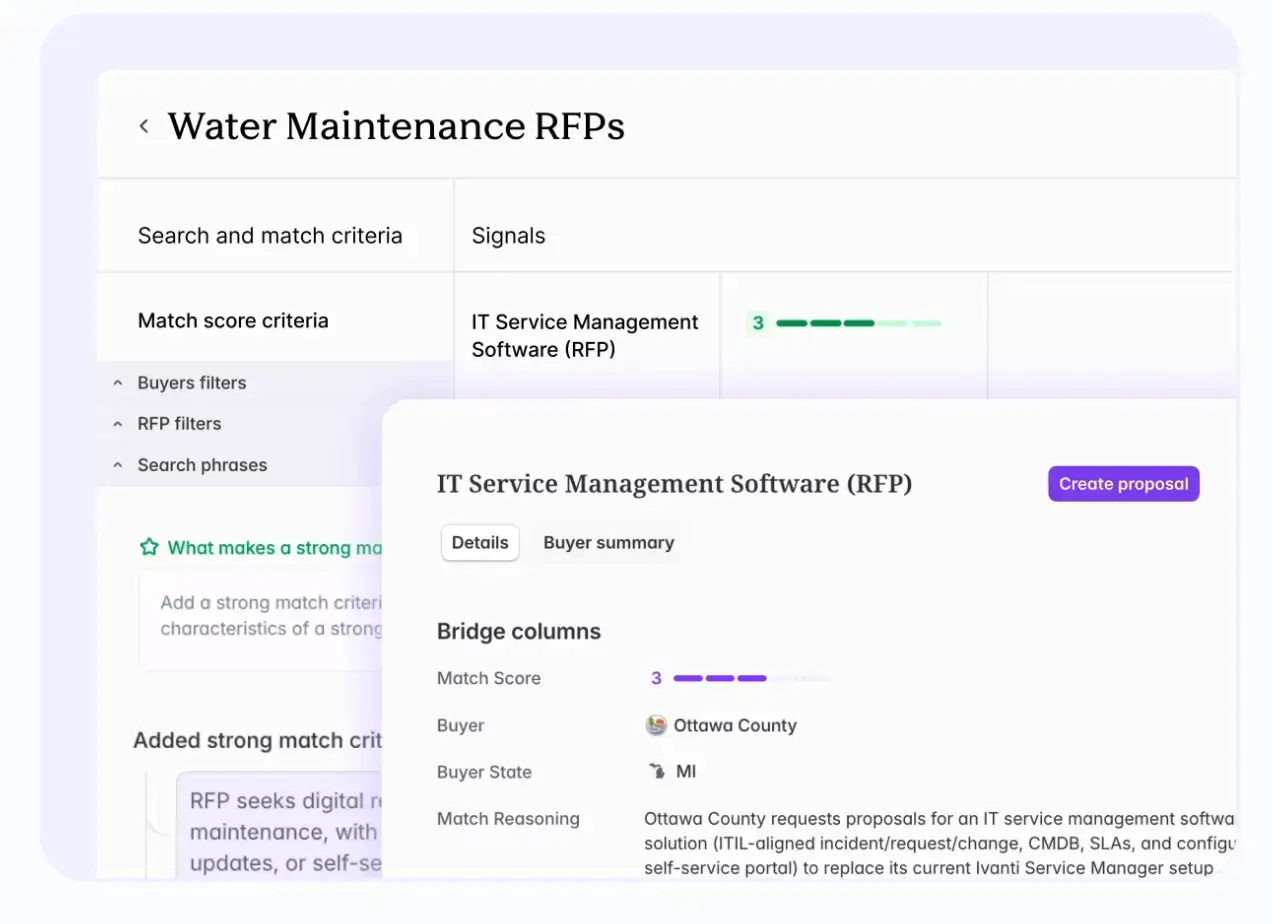
It goes past a bid board. Each RFP is scored by product fit, region, and win likelihood, so a rep spends time on the opportunities the team can actually win instead of reading every posting. When it is time to respond, the AI proposal writer drafts from your product knowledge base, cutting response time by up to 50% and saving 8 to 10 hours per RFP.
The RFP is best treated as the last buying signal, not the first. By the time a bid posts, the requirements are usually set. Starbridge's signal capabilities engage the account well before that point, so a scored RFP becomes confirmation of a deal the team already started, not a cold scramble.
DistrictIQ focuses on the capital signals that precede the RFP
DistrictIQ models the K–12 capital cycle in stages, from early exploration to active planning, then onto the ballot and into implementation. It focuses on surfacing a facility program while it’s still forming. Finding, scoring, and drafting responses to posted RFPs across the government and education market isn’t a stated capability as of August 2026.
The bottom line
DistrictIQ points to K–12 building programs forming early. Starbridge does that across the whole state and local government and education market, then finds the RFP, scores whether it’s worth pursuing, and helps draft the winning response when it posts.
Contract vehicle access that removes procurement friction
Contract vehicle access is the pathway that carries a won deal to a signed, compliant purchase order.
A contract vehicle is a pre-competed contract that lets a government or education buyer purchase from an approved vendor without running a fresh RFP. Once a buyer already wants your product, the right vehicle is what keeps the deal from stalling for months in procurement.
Starbridge puts major contract vehicles inside the platform
Contract Vehicle Access gives teams access to the major purchasing pathways their buyers already use, including TIPS, NASPO ValuePoint, OMNIA Partners, Sourcewell, and more. This access is available as part of the platform.
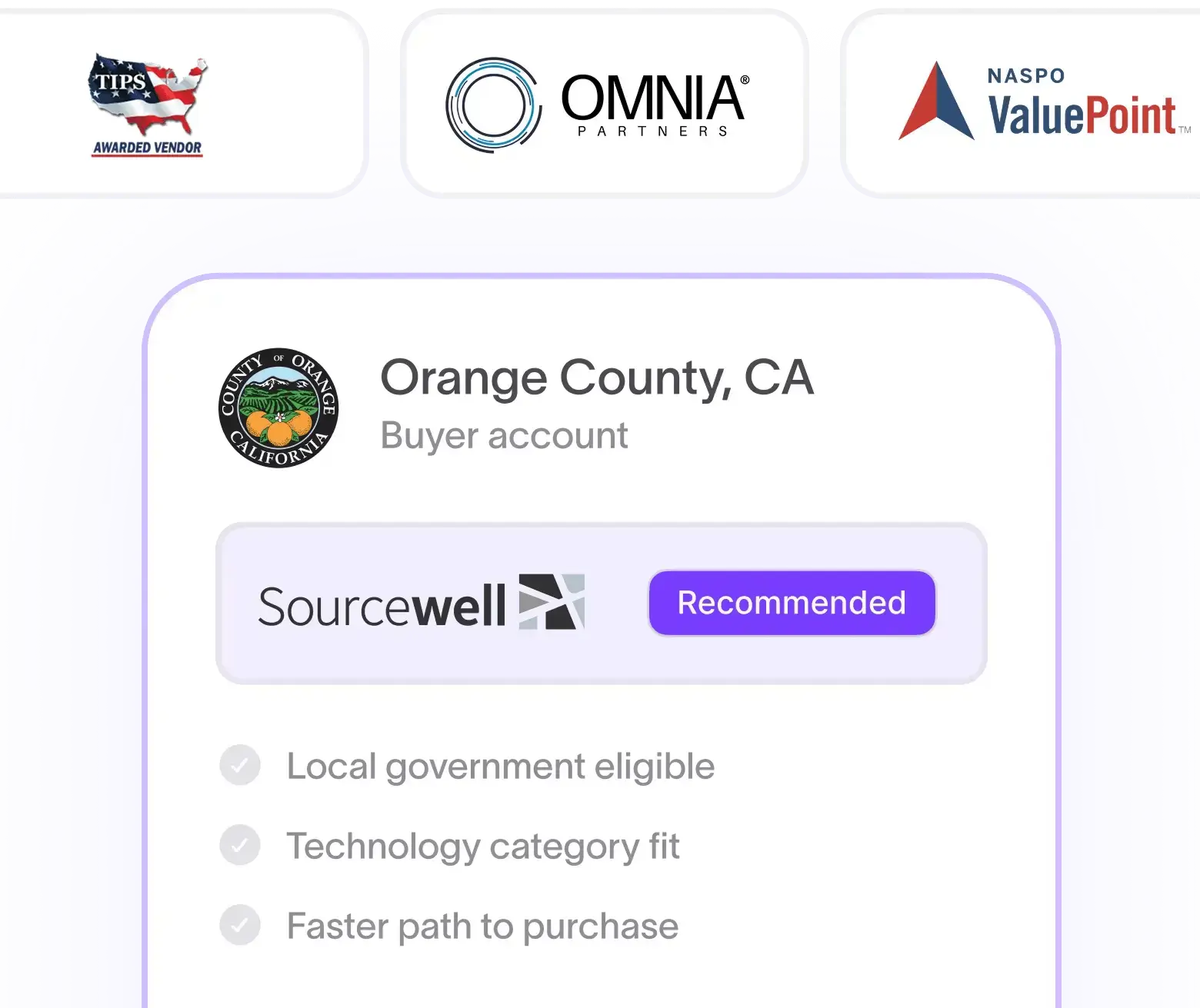
The mechanism matters once a buyer says yes. A rep can move a won deal onto a vehicle the buyer already purchases through and reach a signed contract without triggering a full RFP, which is often what removes months of stalled procurement from an already-won deal.
Starbridge provides this access directly and handles the compliance, paperwork, and renewals itself. Navigate Procurement surfaces the right vehicle for each buyer directly on that buyer's page, so a rep proposes the fastest compliant path instead of guessing which vehicle applies.
DistrictIQ focuses on early intelligence ahead of procurement
DistrictIQ centers on pre-procurement intelligence. The purchasing pathway that carries a won deal to a signed contract isn’t a stated capability as of August 2026.
The bottom line
DistrictIQ helps facilities vendors get in early. Starbridge also carries the won deal across the finish line through a vehicle the buyer already uses, so a yes becomes a signed contract in weeks rather than months.
Which platform helps close more deals?
If you are a K-12 construction or facilities vendor who only wants early capital-project alerts in your territory, DistrictIQ's niche focus can be enough on its own.
For GTM teams selling technology or services across state and local government, K-12, and higher education, Starbridge covers the full motion in one platform. The platform covers buying indicators, verified contacts, spend intelligence, RFP workflows, and contract vehicle access. Every buying indicator arrives with a verified contact, a reason to reach out, and outreach copy pushed into Salesforce, HubSpot, Apollo, and Outreach, so intelligence becomes pipeline instead of another dashboard.
Starbridge also carries a won deal across the finish line. When a buyer is ready, your team moves the deal onto a contract vehicle the buyer already uses and reaches a signed contract without triggering a full RFP.
Book a demo to see how signal-driven selling turns into booked meetings and closed contracts for your GTM team.
Frequently asked questions
Starbridge is the stronger fit for teams selling technology or services across state and local government, K–12, and higher education. It runs the full motion from early buying signal to verified contact, spend intelligence, RFP workflows, and a signed contract in one platform. More than 450 GTM teams sell on it today. DistrictIQ is a genuine fit in a narrower case. A K–12 construction or facilities vendor that only wants early capital-project alerts in its territory gets a focused tool built around that job. Once the motion spans multiple verticals and needs to reach named decision-makers, Starbridge covers ground beyond DistrictIQ's K–12 facilities focus.
Look for a tool that carries a rep from early intent all the way to a signed contract. The five capabilities that matter most are early buying signals across every vertical you sell into, verified and continuously checked contact data, visibility into what accounts already pay incumbents, RFP discovery scored by fit, and a purchasing pathway that speeds procurement. The real differentiator is whether those pieces connect. Starbridge links them into one workflow, so a signal arrives with the contact, the reason to reach out, and the path to close, rather than sitting in separate tools.
DistrictIQ centers on the K–12 facilities and capital cycle, reading board packets to flag feasibility studies, referendum planning, and architect or construction-manager selection for construction and facilities vendors. That is a focused view of one vertical. Starbridge monitors board minutes, budgets, grants, leadership changes, and contract expirations across state and local government, K–12, and higher education, then delivers each signal with a verified contact and outreach copy. A team selling into more than K–12 facilities, or one that needs to reach a named buyer rather than map which firms are engaged, gets that broader coverage from Starbridge.
It depends on how wide your motion is. DistrictIQ does one thing for K–12 facilities vendors, surfacing early capital signals in a territory, and it fits a team whose entire market is that niche. If your team sells across state and local government, K–12, and higher education, or needs verified contacts, competitor spend detail, scored RFPs, and a faster path to a signed contract, Starbridge runs that full motion in one platform. Every buying indicator arrives with a verified contact and outreach copy pushed into Salesforce, HubSpot, Apollo, and Outreach, so intelligence turns into action and, through contract vehicle access, into closed deals.
Explore our use case library
Ready to give your SLED team real leverage?
Let’s talk about how Starbridge can build a qualified pipeline for your current team — without adding headcount.